Thursday, March 14, 2013

"We Need Boring Christians"

Recently one of my college pastors posted this on Facebook and, being a fan of Relevant Magazine, I decided to give it a read. It is an article titled "We Need Boring Christians" and struck me in ways I maybe didn't think possible through a simple online, rather short, article.

So often I struggle with what God has called me to and, for those that maybe follow, we have seen the change in my life over the past few months as I changed my area of focus at school to look at issues of child trafficking in Haiti and I got married. Lots of good changes, but I still struggled with where God calls me to be, what He calls me to do, and how Abbey and I can be open to God's calling for our lives. As the author states:

"Radical is in my resume. Radical is part of our calling. But radical can be dangerous."

 I too used to think I had to be radical to be the person Christ wants me to be. You read books such as Irresistible Revolution by Shane Claiborne and believe that the only way to be part of the Kingdom is to sell everything you own, move overseas, and live a complete life of poverty. Granted, there is nothing wrong with that and if God calls us to it, we are open to it. But there is so much more to living a radical faith in our own lives, in our own towns.

I currently live with my wife and beagle in Cuyahoga Falls, OH. I am right on the outskirts of Akron and only 1/2 hour south of Cleveland. You know what? This area needs Jesus and needs help just as bad as Africa, just as bad as Haiti, and just as bad as any other place you can name. Crime runs rampant, homeless people are all over the street (even more than in Pittsburgh, where I'm originally from), and there is so much hurt in the world around me. I, along with working on my Ph.D., am teaching a lecture of "Physical Geography" to 105 students and, not surprisingly, these students need Jesus as well. I had a revelation the other day as I was so mad grading papers. The students don't listen, they don't follow papers, and I found myself sinking into anger which was vastly affecting their grades. I was not being Jesus to these students. In a world of broken homes, taboo religious subjects, murders, famine, and more...so many people just need someone to be Jesus for them. Be the eyes, the ears, and the heart of Christ here on Earth so that, through us, the Light of the Gospel can begin to shine through.

Being radical can be as simple as serving on the parking team at your church, serving with students, getting a cup of coffee with a hurting friend, or lending an open ear or a helping hand to someone in need (whether you know them or not). We see a car stranded on the side of the road and we talk ourselves out of stopping to help them until, eventually, you're too far away or already at your destination and can't rationalize that "Oh, someone must have stopped to help them by now." Being radical means being Jesus in a world that doesn't know Jesus. Sharing the Gospel at all time. A common quote used by pastors (whether some say he said it or didn't), comes from St. Francis of Assisi to "Preach the Gospel at all times and, if necessary, use words." (I love this quote, especially in light of the fact that yesterday they chose the new Pope, Pope Francis I). There is this calling and this longing, regardless or whether you're Catholic, Lutheran, Anglican, or consider yourself non-denominational, to be Jesus to people, to show Him in all we do, to be a living representation of the Gospel.

I can do it here in Ohio, I can do it in Pittsburgh, I can do it in Haiti, I can do it as I drive to school everyday and practice being a patient and courteous driver (which rarely happens, much to my sadness). Being radical doesn't take you to radical places, but puts you in a radical mind frame that everything you do it meant to further the Kingdom. To do anything other than that which God has called you to do, is a sin. I prayed for God to open up avenues and ways of knowing what I should be studying in school. He made it clear I am to look at child trafficking in Haiti. To do anything else, is a sin. 

We live in a mundane culture that normalizes us, controls us, and calls us to just be "part of the system." We are teachers, accountants, students, parents, siblings, friends....we get up and do our daily tasks forgetting that, first and foremost, we are the Bride of Christ, called to a life devoted to furthering the Gospel and loving the Lord. We are Christians, who happen to teach. Christians, who happen to be accountants. Christians, who are friends, siblings, students, and more. Being radical, in amongst the "mundane", can not only be eye-opening, but could also be our calling. 

Let me know your thoughts, friends.

Monday, February 25, 2013

Human Trafficking and Restavek

My last post was over a month ago, when God really beat me down and began to show me the things He wanted me to look at in school. The pastor at Grace Church, where I attend, said this during the "Wasted?" series I wrote about before (paraphrased), "If you pray for something and God gives it to you, to do anything else is a sin." I prayed for God to show me what to do, where to be, and that I would be a willing follower. He showed up. A heart for Haiti, a passion for children, resources in the university, and a fully-funded degree....these things are only the work of a God who is in control and knows what He wants. To study anything other than human trafficking in Haiti would be a sin. God has been saying, "Cory, I put you here in Kent for this reason. Not to look at natural gas issues or community design, but because I have a larger kingdom purpose."

So here I go. I have been knee-deep in the trafficking research, formulating my questions for my dissertation proposal, and making the contacts I need to make. This is research that will put me in Haiti multiple times over the next couple of years (which I hope my new bride as of 2/16/13 will be able to accompany me on). It'll put me in uncomfortable situations in dangerous places, meeting people, gathering stories, participating, and praying. God has a bigger purpose then this.

As I sit and gather the facts, there are a few facts that are astonishing to me and I want to just share these briefly, as well as a few resources for you to look at:


  • Of the 100,000 trafficking victims in the United States, we have only 100 beds in recovery homes. That is only enough beds to aid in the recovery of .1% of trafficked victims
  • Today, there is an estimated 250 million modern slaves worldwide. The majority are in the domestic labor industry
  • There are more slaves today than at any point in history, even looking at the Atlantic Slave Trade from Africa in the 18th and 19th centuries.
  • Restaveks (French for "To Stay With") are child laborers in Haiti who live with a host family as their personal servant.
    • It is estimated that 30% of Haitian households have a restavek child. This is 225,000 children in a country of 8 million people. 
    • 2/3 of these restaveks are girls under the age of 18
  • Through acts of violence and unkept promises, these children are forced to remain in the restavek system. They are social outcasts, viewed as societal "Others," and dehumanized.
  • Parents willingly sell their children into restavek for the promise of a better life for them in the city, but more often than not they just need one less mouth to feed in a country that has the average worker making less than $1 USD per day. 
There is hope, though, and this is the aim of my research. My specific questions look at:
  1. How are United States-based non-governmental organizations addressing the issue of restavek?
  2. How effective are their efforts to rehabilitate/reintegrate these children into Haitian society and in the eradication of modern slavery in Haiti?
Here are some resources I highly suggest you look at for more information on these modern day forms of slavery:
Keep this research, these organizations, and these modern day slaves in your prayers. Please, do not hesitate to contact me with thoughts, questions, stories, or anything else. 

Monday, January 14, 2013

An Update To Yesterday's Post....

It never ceases to amaze me how God intervenes just when you need Him and how, ultimately, His plan is shown. This happened yesterday only a short time after I wrote my blog about my journey to Ohio and some of the struggles I was having deciding to change my focus and path to look at issues of poverty, crime, war, etc. during my research at school. Let me explain.

I walked into church yesterday morning feeling a little crushed and defeated. I couldn't understand why I was not able to follow where I knew God was leading. I had been thinking over the past couple of days about the movie "Yes Man" with Jim Carrey, where a man is tasked with saying "Yes" to everything and seeing where life takes him. As I sat down with my coffee expecting a status quo service, Abbey leans over with the program and says "You need to look at this..." Here is what I saw:


I sat back, anxiously anticipating service and just praying to God, "I have a feeling You want to speak to me today, so let me have ears to listen." Our Senior Pastor, Jeff Bogue, started a new series called "Wasted" and the message was titled "Saying Yes To God". He spoke on 1 Samuel 3, where God begins to call Samuel, yet at first he doesn't realize it is God calling him and thinks it is just the priest Eli. When Samuel realizes it is God, he says "Speak Lord, your servant is listening."

Jeff spoke about a number of points I won't touch on, but there is one that sticks out and I need to share. He began to speak about following our passions in life and how there are two keys to knowing your passion: 1.) A passion will never go against the heart of God and 2.) your passions will be confirmed by Godly counsel (a group of your Christian peers). Here is where God intervened.

As I sat listening to Jeff speak about Godly counsel, I felt my phone buzz in my pocket. I normally don't check it in church, but I just had this feeling saying "Just take a glance at it."When I checked my phone, I had a long text message from my brother-in-law, a Facebook message from a friend at my old church in Pittsburgh, and numerous comments and posts on my Facebook and on yesterdays blog from Christian friends affirming my decision, reminding my of my passion for the poor a number of years ago, and really spurring me on towards this decision. All of this at the exact moment that God used Pastor Jeff to teach my about the affirmation of Godly counsel.

Needless to say, I spent the rest of the service listening, praying, and, yes, weeping. I couldn't help it and personally, I don't care. God has moved me to tears more times in these past 5-6 months than in my whole life and I see it as an action of Him moving in my life, changing me, helping me grow, and helping me be more Christ like.

Jeff spoke one last thing that struck a chord with me, as I know yesterday I touched so much on my worrying about these decisions. When we are trying to say "Yes" to God, it is important to discern whose opinion we value and who we don't. I spend a lot of time seeking the affirmation and opinion of those who, personally, I don't care for or respect. Yes, I love them as a creation of God but their opinion doesn't matter and isn't needed. It was just another little eye-opener for me that I seek approval from everyone, even those who I don't even care about their opinion on anything else otherwise. It's wasting my time and the resources God has given me.

I highly recommend you check out yesterday's message. It can be listened to on the Grace Church website under "Latest Audio," as of the publishing of this blog it isn't up yet though. It will be listed at the "Wasted" series. Also, if you click on Podcast it will take you to iTunes where you can download it.

Sunday, January 13, 2013

The impoverished and my own inability to serve

I will preface by saying that this blog may be a little more personal than those that I normally post because I am going through a few things in my mind and am using this post as a way to sort those out. While to some these things may not seem like a big deal, to me these are some life-changing decisions that may be made...but let me explain

To those that know, in the fall of 2011 I left my job at Orchard Hill Church as the Sports and Recreation Coordinator for Michigan, where I was to be the Stewardship Coordinator for the Saginaw Basin Land Conservancy. I thought this was my dream position and what God really wanted me to do, not realizing that my relationship with God at that time was an all-time low. I spent approximately 2 1/2 weeks in Michigan before I found myself back in Pittsburgh, at 24, without a job, and living with my parents. My parents were loving and kind enough to let me live for free and give me a job at one of their Subway stores with enough hours and making enough pay to pay my student loans, car payment and insurance, and still have a little left over to be able to do things. On Christmas Eve 2011, I had been bumming around Pittsburgh for 3 months, couldn't find a job, and I remember telling my mom, "Things aren't right between me and God and it's time I get them back on track." It had been a long while since I had found myself on my knees in prayer, but I was in my room and fell to my knees and told God, "You've put me through a lot of crap and I thought I was faithful. I'm sorry I strayed away from you and decided that, once again, I could do life on my own. I can't and I don't want to.  Help me." God worked wonders beyond what I could believe.

Within a week, it was brought to my attention that Kent State's deadline for fall admission had not passed yet for their doctoral program in geography (a program I had wanted to go to for my Masters and never finished the application, choosing to go back to Slippery Rock instead). I hastily gathered my application materials and wrote my essay about how I wanted to study connecting green spaces in urban areas to allow wildlife to move between these parks for mating purposes, etc. God showed up again.

Within 3 weeks, I had an offer from Kent State's Department of Geography to start my doctoral studies with (get this!) no tuition and they would pay me a salary to teach. Within days of hearing about this position, I found an internship in the Cuyahoga Valley National Park writing educational curriculum and I applied to it, never expecting to get it because, at this point, I had applied to around 300 jobs with only a few interviews (I realized recently I had fatal flaws in my resume that employers would throw it out at first glance, but more on that can be talked about later). Well, I got the internship within 2 weeks. Here is how God's hand worked in this. If I wouldn't have gotten the internship, I would have moved to Kent in August 2012, grabbing an apartment in the Rootstown/Alliance area, so I would be halfway between campus and home (40 minutes either way). God had a different plan. He put me in Akron, OH. 

Why is this significant? Well, my best friend had met his fiance online so I figured "New city, I know no one, why not give it a try?" Within a week, I was speaking with a lovely woman and made plans to meet her. If I was living in Alliance, this would have been out of my possible dating range because where she lived, I figured, was too far. But, as I said, God put me in Akron. I moved here in May and less than 24 hours after moving here, I found myself at a winery stepping out of my car and seeing a beautiful girl step out of hers and my awkward first words "Well, you must be Abbey?" 5 months later, I asked that woman to be my wife. 34 days from the time I write this, we will be standing at the alter in a church in the Cuyahoga Valley National Park (where we first met and fell in love) and starting our life together. She is the most Godly woman I have ever met in my life and spurs me to pursue Christ in all I do. 

When I moved to Akron, I researched churches and Grace Church was the top one I wanted to check out. Imagine this, Abbey went to Grace Church and I got plugged in right away. Hmm...imagine this, we wanted to join a small group. God gave Abbey a new neighbor named Daniel, who also went to Grace. We were all invited to a neighborhood BBQ and decided to go. Daniel knew a couple of people from church, so introduced us. We met Caleb and Hannah and talked with them for a while. When we asked the church to pair us with a small group, they paired us with a new group Caleb and Hannah were starting (within walking distance of 1 block to where Abbey lived then). They have since become great friends and great leaders. We have built a great community here in Akron with great new friends and growing relationships

I put my faith in God, and realized I couldn't do life on my own anymore, and within these spans, here is what He gave me (and now us):
  • Doctoral Education (Paid for!): 1.5 months
  • Internship in the national park near Akron: 2.5 months
  • Met a woman who would now be my wife: 3 months
  • Got plugged in at a church that feels like home (today I am taking their membership class!): 3.5 months
  • Got plugged into a community and small group: 5 months
Who knew, a year ago, I would be living in Akron, back in school (a doctorate is one of two main goals I set for my life), getting married, and once again experiencing true Biblical community I thought I would never find after leaving my old small group. To say God had a plan is an understatement. All is took was me on my knees praying forgiveness and for him to enter back into my life and that I would be open to where He guides me. 

Ahhh, but this brings me to my current dilemma. Done reading by this point, that's ok. This next part explains what I'm currently going through. 

I entered Kent with the idea of studying urban planning, parks, green space....the same things I've studied for the past 5 years. Seemed great and, almost easy. Well, let me backtrack.

Yesterday was the 3rd anniversary of the Haiti earthquake. Shortly after the earthquake, I met with a friend at Orchard Hill and said "I will do whatever it takes to get myself to Haiti this summer." Well, God got me to Haiti that summer for 2 weeks, another week that fall, and back again for 2 weeks the following summer. My eyes had been opened to the impoverished world that lies only a few hundred miles off of the southern tip of Florida...the bacteria filled water, burning trash, emaciated children, the violence, the drugs, the struggles, and, most importantly, the hope in the eyes of the Haitian people to see a difference in their country. 

Got put my in a church in Akron that does their main ministry in Haiti....so each week as I hear about their ministry there my eyes filled with tears. During my class in Geographic Thought (essentially, philosophy and social theory), my eyes were opened up to a number of political issues looking at war, violence, drugs, etc. (all that I struggled to process in Haiti). God is calling me....and I'm scared.

Things weren't sitting right when I thought about doing urban planning, as I knew God has called us to do big things in our lives to served the "least of these," "care for orphans and widows in their distress," and "love your neighbor as yourself." Here is what I believe God has been telling me, "Remember that passion you had to help Haiti? I haven't put you here in Ohio to continue studying parks. I want you to study poverty and I want you to continue the passion I put in your for Haiti. I put you here because here are the resources, opportunities, and experts that can help you do that for Me." And I can't get it off of my mind. I have been meeting with a professor in the department who is one of the nation's leading scholars on war and violence (and, conversely, peace geographies). He lit up at the notion of studying the role of Christian non-profits in addressing structural issues of violence in Haiti, especially related to child labor slavery (in Haiti, these child slaves are called "Restavek").
No longer do I feel uneasy about what I want to study (as I did when I couldn't decide on a topic related to parks and urban planning), but I feel scared. Scared that God is going to call Abbey and I to something bigger than we can handle, scared that He may use this to put us in uncomfortable situations, and just in general scared of the situations this may put us in. Scared of the future and employment opportunities that come with this. Scared of a number of things, but yet God puts in my mind the eyes of the children I met in a poor house in the northern Haiti town of Limbé and I weep and realize that, yes, God does want me here. 
A child in Limbé's poor house. Photo by Rob Norris, 2010

He has a plan, but once again, I am scared to do it. Even with Abbey by my side pushing me to follow His calling, I am scared. A life devoted to serving the poor and the needy (whether in the US or abroad)? God, really? Why this? Why not study something that will give me a cushy office job, a huge salary, and a 9-5 that will get me home to my wife and kids? What are you calling me to do? So, this is where I currently sit, 24 hours before the start of the spring semester, and still not being able to decide on a class because of the fear that changing this one class will set that research in place and that I will slide down this path towards poverty research. Living God's calling for my life, I believe. But also a path I prayed He wouldn't send me down. 

He had a plan for me this spring and He still does. I need to follow it and I know this. As Abbey told me last night (paraphrased), "You get so many ideas, yet every week you come back to wanting to study Haiti. When will you just realize this is what God wants you to do and stop fighting it because of your own fear? We will be fine, we will go where He wants us to go. The only true way to succeed is by following His plan."

I have been re-reading Richard Stearn's "The Hole In Our Gospel" about the need for the church to serve the needy. He was the CEO of Lenox China (dinnerware) and former CEO of Parker Brothers, yet God called him (I mean, wouldn't let go of the idea! You need to read the book) to take a position as President of World Vision. A drastic pay cut, moving family cross country, and finding himself spending a lot of time in some of the biggest slums in the world...yet he did it. If a corporate CEO can do this, why can't I?

So, I ask for prayers and I thank you for taking the time to read this and see what is going on in my life as of recent.

Thursday, November 29, 2012

Are Playgrounds Too Safe? A cure for the overprotective parent

In a recent interview on on Q Radio (Toronto), the host and interviewees began discussing the roles of playgrounds around the world, the differing styles of playgrounds, etc. Now, I must admit originally I almost changed the station but as one interested in urban parks and green spaces, and with a background in recreation, I stuck around. I highly suggest you listed to the interview, which can be found here: Are Playgrounds Too Safe?
    Harry Harbottle, of the German playground manufacturer Richter Spielgeräte presents an interesting case about the present state of playgrounds and child safety. Around the world, we are making our playgrounds too safe and they are not spurring the challenge and creativity that our children need...mainly due to the fact that we are so afraid the children are going to get hurt. What are many parents solution to this? We stick them in front of a screen where no harm can become them...at least harm that we can see on the outside.
    For those who may not understand parks and playgrounds, the following picture will illustrate just a little about what Richter Spielgeräte does. These are not your normal play structures, but ones that are made to challenge a child. Looks daunting, yes, but as Harbottle points out adults are more prone to injuries in a playground than children. Children know their own limits and boundaries, while adults seem to forget them in their old age.
   We need to create a culture where children can explore and grow. I spent my childhood running around my parent's 20 acre wooded lot surrounded by farms. I came in when it was dark and sometimes even after. I built forts, build campfires, played in the mud, and climbed trees. I feel, I broke bones, I got scraped...but here I am today a 26 year old healthy individual with a love and passion for the outdoors and a passion for the outdoors and getting away from the screen. Yes, screens (iPads, computers, etc.) are a necessary part of life anymore in our society, but time needs to be limited on them.
   At one point in this interview, they play a pre-recorded phone call from the Director of the National Program for Playground Safety, who openly says that those making playgrounds more challenging and difficult should be charged with physical abuse to a child. I was outraged! Kids are supposed to get hurt, yet we live in a society where we have coddled them so much that they no longer can stand on their own two feet and are afraid to get a little dirty and a little messy. Harbottle rebutted by saying that they do not want kids to get hurt at all, but they plan for "serious bodily harm," which constitutes permanent damage. I agree with this. I know, call me crazy, but don't scars, bruises, and bumps shape us? Don't we learn lessons from the pains of our past?
    The answer is not in keeping your kids indoors or creating a sterile, safe environment. I just read an article in Outside Magazine called "Free Medicine: the therapeutic benefits of playing outside." Let me outline a few of the benefits there are to spending uninterrupted, non-screen time in nature:

  • "When you're relaxing in nature, your adrenal cortex produces less of the hormone cortisol, which activates the body's stress response. Prolonged periods of stress can also shrink the hippocampus, which is where we form and store memories. By contrast, less stress enhances neuro-plasticity, the brain's ability to form new connections."
  • "Sunlight exposure boosts production of white blood cells, which help the body combat disease. Sunlight also increases the number of red blood cells, thereby increasing your blood's oxygen-carrying capacity and improving muscular endurance."
  • "When sunlight hits your eyes, your optic nerve directs your brain's pineal gland to decrease production of melatonin, the hormone the regulates circadian rhythms-- our wake-sleep cycles-- and boost serotonin, a neurotransmitter associated with mood and appetite."
    These are just a few of the benefits of spending time outdoors and these are benefits we can give to our children early in life, when their bodies still are developing and adjusting to the world around them. We can set them on a healthy track for the rest of their lives (hopefully). By immersing your kids in nature, they will grow up appreciating the world around them, feel less stressed, more productive, more focused, witness less cases of obesity and diabetes, and have better relations with people around them. As parents, getting our kids in nature gets us in nature. 
    We, even as adults, can experience these benefits and they are lasting! Even a one-day trip to a suburban park has been shown to boost cancer-fighting proteins for 7 days. That's once a week, getting away from the TV and the screen, and even just to a city park. I believe we can all do that. 
    There are immense psychological and physical benefits to getting our children (and ourselves) outside. Not only do they develop the ability to think, solve challenges, and be creative, but it is physically better for their health. As parents and adults, we coddle our children into this safe world, where they do not get dirty and do not get hurt but it is to their detriment. We need to live in a world where we are not afraid to let our children play outside, play baseball in the yard, run rampant until the streetlights come on, and explore the world around them. There is value and power in exploration.

As always, if you have thoughts or comments, please Email Me.

Thursday, November 8, 2012

Plight of the American Food System

The following blog post is a reaction paper I submitted in class based upon an article looking at how governments use food scarcity to control their constituents. The article can be found at the following reference:

Nally, D. (2011). The biopolitics of food provisioning. Transactions Of The Institute Of British Geographers36(1), 37-53. doi:10.1111/j.1475-5661.2010.00413.x


~~~~~~~~~~~~


            David Nally presents a very interesting viewpoint in his article, “The Biopolitics of Food Provisioning.” I believe it is an argument that we see throughout the world today, as prices on “healthy, local” foods go up and those of fast food chains continue to plummet. We live in an age where you can buy two hamburgers, a large French-Fry, and a large soda for the same price it costs to get a head of broccoli. The problem is an underlying social problem, really. I believe that many of the citizens of the United States believe food should be cheap and that they are ultimately entitled to three meals a day, although we all know this is not the way that the world works. Additionally, and we can consider this throwing in a critical feminist argument, as more women have entered the work place, we have lost the “home makers” who prepared a full dinner for the family when they returned home from school and work. I am not arguing that women in the workplace is a bad thing, or even that a woman’s place is in the home, but merely suggesting that as humans our lives have become so busy, and technology has not helped but exacerbated this problem, to where we no longer can sit and enjoy a meal together. We eat on the road, stopping at a drive-thru, and getting cheap beef produced in Concentrated Animal FeedingOperations (CAFO).
            To preface my argument, I will say that my master’s background is in Sustainable Systems, working a lot with sustainable and organic agriculture. I grew up on a small farm in western Pennsylvania, studied agriculture initially at Penn State, and my fiancée’s parents are sustainable and organic farmers in central Ohio. I have an interest in agriculture and Nally presents points of passion for me when he talks negatively of Cargill and Monsanto. The commercialization of agriculture has led to the demise of the small-time farmer. These two companies are the bullies of the agriculture industry, as can be seen in the recent election where Proposition 37 in California to label Genetically Modified Organism (GMO) was knocked down. As Dr. Emariana Taylor put it on the social media site, Facebook, ‘this shows the power of Monsanto more than the voice of the people,” (Taylor, 2012). Books such as Michael Pollan’s “The Omnivore’s Dilemma,” and movies such as “Food, Inc.,” “Our Daily Bread,” and “Frankensteer” are replete with images that depict the horrors of our current food system (Pollan, 2006) (Robert Kenner, 2008) (Nikolaus, 2009) (Remerowski, 2006).
            Nally further ties into this argument with his discussion of Foucaultian biopower, which I took to mean a government’s control of biological factors (agriculture, natural resources, and similar commodities) to exhibit power over its constituents. The United States government and a handful of large agro-industrial companies, with Cargill and Monsanto being to two main culprits, largely control today’s agriculture system. Farmers, according to Nally, have become the new proletariat class and these large companies are the bourgeoisie, essentially enslaving the individual farmer. It is capitalism played out in a large scale over the whole world, as the global north (also a bourgeois class) seemingly takes advantage of the global south (proletariat). A traditional Marxist viewpoint, according to Noel Castree, would examine these labor relations and find solutions to benefit all and advance the status of the American farmer, as this industrial agriculture system seeks to destroy traditional ways of life. Additionally, small time farmers are being forced to pay higher prices for Monsanto and Cargill seed, which are genetically modified to not reproduce ensuring these farmers will re-buy seed yearly. Lastly, the United States government has heavily subsidized the production of corn and soybeans, leading to an agriculture monoculture (Pollan, 2006). Animals (beef, chickens, and even salmon) are fed this corn so that a bigger return is seen from people who eat these products. Whereas we would not pay a lot for corn, we would pay a lot for these animal’s meat that has been fed largely on corn. Plus, the time from birth to production is decreased as animals are “fattened up” on cheap corn over the span of months to a point that normally took a year or more to reach.
            This is an area I am fascinated by and ultimately disgusts me. The one quote I always repeat is this, “Small scale farmers and teachers should be the highest government subsidized positions.” There is merely not enough time to dive into these issues in a two-page reaction paper, but I highly recommend the following pieces of media in the Works Cited section.

Works Cited

Nikolaus, G. (Writer), & Nikolaus, G. (Director). (2009). Our Daily Bread [Motion Picture].

Pollan, M. (2006). The Omnivore's Dilemma. New York, NY, USA: Penguin Press.

Remerowski, T. (Writer), & Marrin Cannell, T. R. (Director). (2006). Frankensteer [Motion Picture].

Robert Kenner, E. P. (Writer), & Kenner, R. (Director). (2008). Food, Inc. [Motion Picture]. United States.

Taylor, E. (2012, November 7). Facebook Post. Kent, OH, USA.

Wednesday, October 17, 2012

The Urban Environment

As many know, I have been thrust into the midst of my doctoral studies at Kent State University. It has been interesting to see that vast amounts of research and resources the university has, as well as how my own personal research interests tie into the current work being produced. I have spent the past few weeks meeting with sustainability coordinators, conversing with city planners, and talking with colleagues from my Masters program at Slippery Rock as I begin to look at urban planning, specifically the re-use and redevelopment of vacant land sites in Cleveland and Akron. It has been amazing to see and the purpose of this post is to highlight some of the issues and problems I have seen arise.  If you're from Northeast Ohio, you might find some of these statistics interesting.

Another recent article from the University of Washington (Tight Squeeze) discusses how dense urban areas may actually be better for wildlife biodiversity than suburban sprawl, yet cuts down on people's interactions with nature and the outdoors. A truly interesting dichotomy.

Cleveland:
The following information comes from a recent article in The Cleveland Plains Dealer and email correspondence with the City of Cleveland Planning Commission.

  • Cleveland currently has 8,500 houses ready to be demolished, with that number expected to rise to 13,500 houses over the next 5 years
  • Including those current houses, Cleveland has an estimated 20,000 vacant lots/properties in the city
  • It will take an estimated $4.5 billion over 22 years to demolish all of the houses that need razed
  • Cleveland is currently interested in the redevelopment of those lots into Urban Gardens/Agriculture, renewable energy development (solar and wind), and wastewater/stormwater management, as well as similar environmental services
Youngstown:
The following information comes from a phone interview with a colleague at the Youngstown Neighborhood Development Corporation.

  • Youngstown currently has 23,000 vacant lots
  • At an average of .16 acre/lot, there is an estimated total of 3,680 acres of vacant property
    • Youngstown has 21,696 acres of land in the city, so almost 17% of their land is vacant
  • Of these properties, there are approximately 6,000 vacant structures (mixture of both commercial and residential)
  • Much like Cleveland, Youngstown is interested in urban gardens and agriculture, Side Yard projects (where a neighboring land owner can buy a vacant lot for around $200), and creating public use spaces such as parks. 
It has been interesting to see how cities are viewing and attempting to re-use their land resources and there are plenty of "players in the game," especially in Cleveland. A simple graphic I drew up shows just how many parties are invested in these issues in Cleveland:


After speaking with the City of Cleveland, I have been told that each organization has a plan and all the plans should be considered as "in action." Seems like an awful lot of corporations and organizations, who ultimately could pull their resources and work together to solve this issue. "Great minds think alike" and "Two heads are better than one" come to mind. Collaboration, collaboration, collaboration. If we are to look towards a sustainable future for Cleveland, or any major or micro urban center, we need to see different parties (government, non-profit, for-profit, educational institutions, and individuals) working together for the "common good."

According to my source in Youngstown, they're really the only player in the game there, so they can work closely with the planning office. The same seems to be for Youngstown, where there is a main non-profit group working with the city. This could be the answer or maybe having 10 different organizations really is the key.

Only time will tell, but it has been interesting to look at nonetheless

Monday, September 24, 2012

The "Terra Incognitae" of Scale


The following blog is a reaction paper I recently wrote for my Geographic Thought class, but as I am interested in the social and human interactions with the environment, I thought it best to share. I have tried to include links to some of the names and works you may not know.
        
       With the wealth of knowledge available to us today, including thousands of years of human exploration of the planet, satellite images to fine resolutions of some of the most remote areas, and the availability of a wide-array of information on the internet, the idea of Terra Incognitae seems to note exist. This is merely at first glance, though, as John K. Wright argues, “if we look close enough…the entire earth appears as an immense patchwork of miniature terra incognitae.” Our world has been explored, dissected, explained, and re-explained; yet Wright argues that to the finest scales there are still miniature-unexplored areas in our own back yard. Yes, it is true that when viewed from space there are not many unexplored areas of our world and human settlements have spread out from the initial occupation of Mesopotamia’s Fertile Crescent to dot the landscapes around the globe, but I must agree with Wright’s examination that there are still areas yet to be explored…even if in our own backyards.
            Yi-FuTuan presents another compelling argument to support Wright’s observations as he discusses our sense of place and what constitutes a “place.” He describes place as the “center of meaning constructed by experience,” and that “to know a place full means both to understand it in an abstract way and to know it as one person knows another.” The idea of place is all around us…different areas hold different meanings for nations, cultures, all the way down to the tiniest infant. To a newborn baby, their mother’s arms and their cribs are one of the most important places that exist. Their worldview is so much smaller, yet they know the cradle of her elbows better than anyone else. This is the place that they feel safe, a place that has meaning and can define who they are. In Tuan’s words, this is Home, or a “nurturing shelter.” We see places, unexplored in our own worlds, all around us. While it may seem that we know what is over the next ridge top or around the bend in the highway, we never really can grasp it as place is constantly changing. While we believe that we can quantify all the qualities that describe a place, D.W. Meinig, in their work “Geography as an Art,” counters (and correctly so) that we cannot accurately describe place in a quantifiable way, but we need to look towards to arts to best describe these places. How does science quantify the look and smell of a place but by assigning it to a number, which can be analyzed, while to an individual these convey entirely different meanings and bring about different reactions. We are reminded of Carl Sauer’s call to go “beyond science” and towards a descriptive, qualitative, sense of place.
            As geographers, we tend to write to other geographers and, in this, we lose the meaning of an area. The best descriptions of these terra incognitae can be viewed in the realm of literature. Just because Thoreau described Walden Pond vividly does not mean it is not unknown to us. While we have an image of what New England may look like in the fall, ultimately it does not (in my opinion) become a place until we have experienced it for ourselves, until we have explored the world around us and developed our own meanings and feelings towards the plants, animals, sights, smells, tastes, and feel of each individual square foot of a place. Place cannot be quantified, but only explained in a descriptive manner in an attempt to convey our own meaning, hoping to instill a desire for our listener/reader to visit and form their own sense of place. Each place is different for each person. As a twin, my mother’s arms were a completely different experience to me than they were for my twin, even though we regularly experienced them in the same temporal construct.
            In my mind, it is a simple call (at least for the human branch of geography) to turn from a quantitative style back to our qualitative roots. We need to be able to accurately describe an area and instill a desire to visit before we can begin to qualify and “solve” the issues we believe the area to be facing. Place is unique, place is different, and each place reacts to the same stimuli in different ways. For example, my current research interests are looking at the sociopolitical and human impacts from Marcellus Shale natural gas drilling, specifically examining agriculture farmsteads. Each community, each farm, and each individual member of the farm family will react to this industry in different ways. It is my hypothesis that this industry has altered the original “sense of place” of the family farm and, in some cases, erased a sense of place. A farm that has been in the family for a century, yet is now riddled with the well-pads, roads, and other drilling infrastructure, may not hold the same intrinsic value to a family (or individual in that family) that it used to. It may have lost its status as a meaningful place to now be viewed as a negative place (such as we would a jail and similar places).
            It was interesting to note Tuan consider the family farmstead in his analysis of “place.”  In his words, “farmsteads are places, centers of meaning to those who live in them. “He states that, “sparsely settled farmlands are somehow more meaningful that cities, and wilderness areas ore meaningful than farmlands.” We fight “place,” a sense of meaning” from these rural areas. He goes so far as to state that, “to people of urban backgrounds, farms…are aesthetic and religious objects.” More commonly, cities hold meaning because of the amount of occupiers, but farms (and even the intrinsic value and ideals placed on these farms from those who may never visit them) hold immense value as well to those who consider a rural existence their lifestyle. Will I ever visit every farm in the state? No. Will I climb every mountaintop in Colorado to examine the splendor of our planet? No. There is, however, the intrinsic value of knowing these places exist, that they are safe and protected, and that they provide a glimpse into “how life was meant to be.” This gets into a whole different argument of conservation lands and the intrinsic values behind them, but simply stated we can put a place value on locales we have never, nor may ever, step foot in.
            There are unexplored areas, terra incognitae, all around us. We can look in our own backyards, re-explore an area, and infer different meaning each time. Each of these areas, whether explored or not, can hold a place value in our society just by knowing they are there and through their continued existence. Sometimes the not knowing what is around the river bend can be more exciting than finding out and being disappointed. As a geographer, I love to explore and know what is out there, but sometimes also revel in the “not knowing.” Terra incognitae can have immense value and relief in sometimes not knowing the unexplored.

Monday, September 17, 2012

The Romanticism of the Small Farmer

Recently, I read Tamar Haspel's article in the Huffington Post, "Don't Romanticize Small Farmers---Some Are Jerks." This was a very interested take on the role of small and sustainable agriculture in our food system today. Granted, I should preface by saying that I will buy local and sustainable above large factory farms at all costs, but it's still interesting to note small farms from a social science standpoint. Books like Michael Pollan's "The Omnivore's Dilemma" and movies such as "Food, Inc." do a great job in bashing large scale farming, which I totally agree with, and romanticizing the small-scale farmer. Haspel presents an interesting view of the small-farmer and I feel they align with my own viewpoints to an extent.

Many small-scale farmers are law-abiding citizens, but as with any industry you will have those who "cook the books," tax evasion, animal cruelty, etc. Which brings an interesting thought to mind...why not eat food from the farmers we know. If you search hard enough through the contacts in your iPhone or the 1,300 friends on your Facebook, you're sure to find someone who in engaged in some sort of agriculture. Step out of line at your local grocery store and buy what you can from them. I frequent farmers markets, my girlfriends parents have a small farm with fresh dairy & produce, and my parents have a huge garden that produces a ton. So while not all of my food comes from sources I know, a lot of it does. At a farmers market, you have a chance to sit down and discuss with the farmer about their practices, their beliefs, etc. You can gain a great insight into where your food comes from and the hands that harvested it, instead of the label at your local Giant Eagle that says "Produced Locally." As a geographer, I have to wonder what their scale of local is. I would say 25 miles or less from the store. What if their 25 miles is from their headquarters, not the individual store. See folks...it brings about a lot of other interesting questions.

Crazy, I agree, but in today's society we have become so detached from the land around us. I once read an article (which I cannot think of the name) where kids could not point out a carrot in front of them because it wasn't shaved and shaped like the baby carrots they get at school and did not understand how carrots and vegetables grow. It's sad, but as cities grow and small towns shrink, we begin to lose that connection with our food system and our natural world. Yes, it is unreasonable to think that every family could know where every bit of their food comes from, but isn't it worth exploring it a little more? Efforts such as The Slow Food Movement are trying to slow down how we get our food so that more people can gain an awareness of where their food comes from. Whether a nugget from McDonald's or a  freshly killed chicken from Joel Salatin's "Polyface Farm," it was once still a chicken that lived, was killed, and brought to your table. Why not change the way you eat it, know where it comes from, how it was processed (heck, even go to the farm and help process it), and learn about our food system.

So, I can agree with Haspel's argument that we don't know the source of food from all local farms, but I can pretty much generalize that all factory-farms are not going to have the care you'll find at a small-scale farm. We need to support our local agriculture, learn about where our food comes from, learn about the systems that make up a farm and how they all interplay together, and witness a revival in the food system in America. Yes, even I am guilty of eating the occasional fast food when I'm on the go and, yes, my parents do own Subway sandwich restaurants in our small town, but on the whole we like to have an idea where a lot of our food comes from. We co-op with others and buy a whole cow's worth of meat from a neighborhood farm, get pork and other things from friend's farms, catch our own fish, grow our own vegetables, and (a favorite pastime of my brother and I) scour the woods of western Pennsylvania for wild Leeks (or Ramp, depending on where you're from). Again, I admit I don't always pick up a shovel and plant or play a key role in a lot of this at this point in my life, but I still like to be involved in the process and know where it all comes from. We need to support our local agriculture before we lose it. We need to be subsidizing small-scale farmers and decreasing the monoculture of corn or soybeans that we see developing across the Midwest, and we need to know where our food comes from.

As I always say, we are part of a river system. Everything comes from somewhere and when we are done with it, goes somewhere else and affects someone else. We are all upstream and downstream from everything else.

Monday, September 10, 2012

Protecting The Great Lakes

Today we have, what I consider to be, one of the biggest environmental strides that I have seen as of recent. The United States and Canada have re-devoted themselves to the continued protection of the Great Lakes resources, according to "Agreement To Protect Great Lakes Signed By Canada, U.S." of Bloomberg.
Map of the Great Lakes Basin

The Great Lakes Basin is one of the largest watersheds in our nation, affecting millions of people and holding roughly six quadrillion gallons of water . By affecting, I mean supplying fresh water, fish, recreation, shipping, and more. Those are the positives...but it can supply negative effects too if we are not careful. Polluted waters, invasive species, and other similar threats are growing throughout the Great Lakes Region. Anyone who has been near one of the lakes has surely seen signs about stopping aquatic invaders, such as the Zebra Mussel or Gobi. We are also threatened from within our own boundaries, as Southern cities and states, such as Atlanta, have been vying for water resources from the Great Lakes to combat the drought problems plaguing the country, according to The Daily Green.

Even if you don't live within the Great Lakes Basin yet live in one of the surrounding states, I can almost assure you that the Great Lakes have affected you in some way. For me, it was countless trips to Presque Isle State Park in Erie, PA and fishing charters around the islands near Put-In-Bay, Ohio that helped instill a conservation ethic in me. Reading through this blog, you have probably read of a number of things that have instilled this ethic in me, and yes, it's true that it is hard to pinpoint. It is a collaboration of all of my time spent outdoors growing up...on the Great Lakes, skiing all over the country, traveling throughout the west and New England, exploring my own backyard, and hunting/fishing trips with my dad. So while I didn't live in the GL Basin (growing up in Pittsburgh), I was still affected by the lakes immensely. They're a source of pleasure, whether I use them daily or not. They have an intrinsic value, simplistically, they have value just because they exist. The plants, animals, microbes, and thousands of other moving parts make up a diverse and exciting ecosystem that I am proud to see will continue to be supported in the future by both the U.S. and Canada. It should be a great stride forward in protecting more international resources and will hopefully be an example to other nations about international conservation efforts. (It isn't the first time the U.S. and Canada have collaborated. See the Waterton Glacier International Peace Park in Montana, US and Alberta, CA).

As we move away from thinking within our boundaries and more towards ecosystem thinking, these international conservation treaties will become even more valuable to protecting the natural resources of our world. Remember, every river has an upstream and every river has a downstream. We all affect everyone else.

Let me know your thoughts by emailing me here!

Wednesday, August 29, 2012

The continued fracking debate...

Today, we got into it on Facebook about this video looking at the supposed health concerns caused by hydraulic fracturing in the Marcellus shale region. This post is merely to show the dialogue of this conversation (with people's names kept anonymous) and to spur a possible conversation. Please email me here to let me know your thoughts.

My original posting text in response to video: I saw this posted and I really can't believe it (I mean, I don't believe its claims one bit)...but more I can't believe people would believe any of the unscientific claims made in this video. Show us the scientific evidence that these claims of cancer were caused by hydraulic fracturing and then we have an argument. Otherwise, this video is completely falsified. What if I claimed that being in close proximity to the fracking fluids actually solved some sort of medical malady? According to this video, I don't even need a doctor to verify it and you have to believe it. I'm all for appealing to the heart of people...but this stretches it a little. It's the same sort of stuff Josh Fox claimed in Gasland which numerous non-profits and private firms have found to be false.

Commenter #1: Kind of like the guys' wife that Mitt killed Cory.. unbelievable how they come up with this crap!!

Commenter #2: mmm I'm going to disagree. There are 'unknown' chemicals likely carcinogens in fracking fluid. Livestock that are exposed to fracking water spills show illness and miscarriage. I doubt every health problem stated is caused by fracking but water isn't renewable.

Commenter #3 (who was also the original poster of the video on their page): Because flaming water is normal? Tested water contaminated with natural gas isn't scientific proof? Just coincidence that people and aminals are sick? Would you drink that water? Chemicals forced at 9000 PSI wouldn't disrupt our water tables? I guess common sense isn't common anymore..

Commenter #4: I believe that fracking is very dangerous Cory. You are welcome to your opinion but so am I. We can agree to disagree, I guess. ♥ (with link to this video that I haven't yet had time to watch)

My rebuttal comments: 
It's not a perfect system and I never would argue it is. Keep in mind, I come at these opinions from an educational background that is strictly against these methods...yet it was their lack of being able to accurately explain themselves tha
t led to me to actually look at "the dark side." There are going to be accidents, there are going to be spills, and yes...some water will get contaminated. The only way to develop a more environmentally sound method is through trial and error. As I say many times in my blog, The car wasn't perfect the first go around, but it got perfected over time. The other problem we have is the lack of viable alternatives. Without a solid natural gas supply, we will still be dependent on international imports of oil where prices are determined by speculators. Notice the prices go up 15 cents yesterday? Speculators were worried about Hurricane Isaac so cut our supply. I believe natural gas needs to be developed and taxed, with 100% of that tax going towards the develop of renewable and alternative forms of energy (mainly hydro, wind, solar, and geothermal)...but unfortunately the technology isn't there at this point to supply nearly any of the demand that we have. Gas will soon be at $8, $9, $10 dollars a gallon if we are not careful to develop alternatives. Yes, we need to develop alternative energies and I am 100% for a petroleum-based fuel free economy. I am for local foods, home grown goods, small town shops, do-it-yourself..sustainability (as Commenter #2 can attest to) but what is our alternative in the mean time?


I just believe there is propoganda on both side. There was Gasland and then the pro-drilling side released Truthland. There is this Woodlands story and I promise I could find a rebuttal video if I had a few minutes to look. My argument isn'
t necessarily for or against fracking..we are each entitled to our opinion....but more for the fact that this video presents no solid science, sources, etc. If a video can come out and support things with scientific fact...then I'll listen to it. Let's not also forget that, as a Christian, I am a steward of the environment and a steward of the resources God gave us.


But I guess I should preface all by saying that I completely am a fan of a well-rounded and educated argument and I know that at least the 3 of you who commented have most likely dived into the topic (I know Commenter #2 and Commenter #4 have for sure and
 Commenter #4, I can imagine living in Vermont there are a lot of resources up that way). Everyone is surely entitled to their own opinion. And this is actually a topic my dissertation may look at...human perceptions of natural gas drilling in the Appalachian region.

Tuesday, August 28, 2012

Climate Change Communications

It is interesting to note that in this present day, we are still weary of talking about a changing climate. With hundreds, if not thousands, of scientists devoting a lifetime of study to looking at how humans have impacted the natural world, you would think this would not be such a taboo subject. In a recent New York Times article, Zoos and Aquariums Struggle With Ways To Discuss Climate Change, we read that, while some zoos across the country are tackling such topics as human-induced climate change, many don't because of the backlash they feel they will receive from their customers and visitors.

We live in a day and age where natural lands and opportunities to connect with nature are being pushed to the wayside in exchange for ever-increasing access to large box stores, suburban environments, and replicas of the city life that has been so romanticized throughout film. With this, zoos, parks, and other public owned green spaces need to be at the forefront of the climate change movement. As I have seen through my research into state park sustainability, parks and zoos may be the only interaction that people ever have with nature and every opportunity needs to be taken to make sure that we, as scientists and enthusiasts, can impact the world in the biggest ways.

95% of scientists now agree that climate change is real and is caused by human influences, such as automobile emissions, agriculture, and more. Who are we to argue against this science because we do not want to put the blame on ourselves? Buy into the "Climate Gate Scandal" from a few years ago all you want, but the science is still out there. It is sad that zoos are afraid of what their customers will say, so they shy away from presenting these messages.

I spent the summer in the Cuyahoga Valley National Park as the Climate Change Intern and have recently started my Ph.D. in Geography at Kent State University. Do you honestly believe that, in a public-urban park such as Cuyahoga, I did not come across any climate change skeptics? I did...but I didn't back down. It's a matter of knowing your facts, understanding both sides of the issues, and being able to present a decent argument (although constantly doing it respectfully) about why climate change is real and what we can do about it. The science is there blaring in front of our faces, yet our public institutions are too scared to accurately present it.

Let's not be stupid. Besides, even if I'm wrong (which I don't think I am), does the thought of healthier air and water, safer neighborhoods, and healthier foods sound better? That's all we are arguing for in sustainability. Using our resources in a manner that our future generations can have them (or my caveat, have the resources or have the knowledge, skills, and abilities to develop viable alternatives). I do not shy away though from anything that may be seemingly controversial. If I did, you wouldn't see me in the field I am today.

It's time for a wake up call, a call to action, and a return to sound science where we can see that the climate is changing, we are to blame, and we are the solution. Don't forget, I'm a scientist, but first and foremost a man of God. We are called to be stewards of our environment and protect His creation.....and that starts with the atmosphere and our climate.

Monday, August 20, 2012

An Improving Atmospheric State?


United States CO2 emissions on the decline, but this does not account for phantom methane emissions from natural gas.

According to the Rachel Nuwer of the New York Times, annual atmospheric carbon emissions are lower than anytime during the previous two decades. It's an interesting face to note in this article that they attribute this to the rise in natural gas production and usage. Pennsylvania has played a key role in this growing industry over the past few years and it will be interesting to see what will happen with future carbon emissions as our natural gas consumption goes up and coal-based fuels go down. According to the article, natural gas now accounts for 30% of electricity and coal-based has fallen from 40% to 34% (industries such as solar and wind account for roughly 5%). Should we not see the writing on the wall that we do need to phase out coal-based electric production, phase in natural gas even more, and tax this industry at a reasonable level with that tax 100% going towards to research and development of renewable and alternative forms of energy?

In a recently blog post on natural gas flaring, I discuss what this article describes as "fugitive methane" or unexpected/unaccounted for emissions of methane from flaring and hydraulic fracturing (a.k.a. fracking). This is true that these emissions are not accounted for, so maybe Ms. Nuwer should account for these emissions if they are such as worry before making bold statements about the atmospheric state? Methane is, in fact, a more potent greenhouse gas than carbon dioxide so we should be worrying about these phantom emissions, but I am not sure (although this article does a good job at summarizing the different viewpoints and facts on this issue) of the validity of these fugitive claims. It is reported to be up to 72 times more potent over a 20 year time frame, according to the Intergovernmental Panel on Climate Change.

Click here to email me and let me know your thoughts on these issues.


Sunday, August 19, 2012

Demise of the human condition

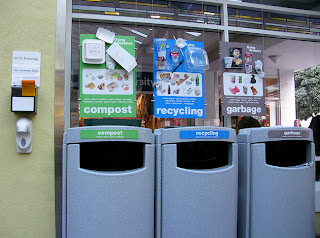
I am continually amazed and appalled at what I consider the stupidity of mankind and, what I feel is appropriately termed, the demise of the human condition. I spent the afternoon today at the Akron Zoo with my girlfriend, her sister, and her sister's two children. Now, I will preface by saying I am a huge fan of zoos! I am one of those people that will read every sign and soak in as much information as I can about all of the animals. I believe that zoos do a lot of good in preserving species, promoting conservation, and educating the public...which (hopefully) instills a conservation ethic in the visitors. I know it was many trips to the zoo as a child, and environmental education centers where I was in contact with wild animals, that contributed my my studies in the environmental and sustainability sciences. What I saw today, while possibly stupid to others, bothered me to no end because it is something I saw throughout the summer in the Cuyahoga Valley National Park. Let me begin with a simple picture:


This is not the trash bins that were at the zoo, although very similar. In fact, the bins at the zoo had compost (including pictures of what could and could not go in there), recycling (including the different recycling numbers), trash, and a few others. They were very descriptive and easy to see what was supposed to go where. They were even designed just for the zoo, so the pictures were zoo concessionaire specific products.

What I saw absolutely appalled me. First were children, approximately 12 years of age, coming up and throwing their recycling into the compost bin. Then came adults who were throwing their food waste into the recycling. The big kicker at the end was the teenager who came up and did her best to divide up her items, but her dad came up behind her and put everything (yes, including the non-disposable serving tray) into the recycling bin. We are living in an age of stupidity or total apathy where people just don't care. As long as it's not in their hands anymore, they don't care where their waste ends up. It would take approximately an extra 20 seconds out of your time (maximum!!) to correctly divide up your waste. 

Not only this, but as soon as we go out of the car in the parking lot I saw a woman just throw her trash on the ground and walk away. I almost picked it up and threw it back on her. It's laziness, stupidity, and an utter lack of responsibility.

In an day and age where we are constantly engrossed in the latest social media, YouTube videos, news,  drama, and more, we are moving at an ever faster pace that has caused us to lose touch with the world around us and think about the life-cycle of where our products end up. Those plastic bottles in the composting bin do not decompose, but will only destroy the  newly created soil and contaminate the plants that will use this product. It may not seem like compost items in the trash is a big deal, as it will end up in the landfill, but it is contributing to an ever growing epidemic of landfills across our nation. We have the opportunity to create a change in our nation and our world by being able to slow down. This encompasses not only where our food comes from (Slow Food International) but also where it will eventually end up. Waste is piling up on our roadways, in our parks, throughout our waterways and oceans, and in our atmosphere. Just because you may not see the biproduct of burning fossil fuels (although I am a proponent of natural gas drilling) does not mean it isn't waste. I am urging anyone who reads this to take a moment to think about the life-cycle of our food system. 

I highly recommend reading Michael Pollan's The Omnivore's Dilemma, a wonderful book that describes the state of the food system in the United States. Other popular documentaries include:
I present these titles not as a means to go vegan or vegetarian, but as a way to show you that we need to be aware of the life-cycle of our choices. Where do the parts and materials that make up our cars and our computers come from and where do they go when we are done with them? Where do those plastic six-pack holders come from and where do they go (Yes, I cut mine even if I recycle them in case they end up somewhere they shouldn't so they don't hurt animals)?

It's a matter of being smart, slowing down, and stepping back to read the signs that point us to where to put our waste and also strive to educate us. If it's a food item, it can be composted. If it's plastic or metal, it can almost always be recycled. Pretty much everything we use can be recycled in some way, if you're willing to turn over the can or plastic bottle look where it goes. When you turn over a bottle, you'll most likely see something like the images below or some variation that will point you in the right direction:


Now, today's idiots didn't even need to look on the bottom as it was recycling numbers 1-7 in the same bin...they were just lazy and irresponsible. I took it as a lesson to educate my girlfriend's niece on where our trash goes and why. Hopefully we can begin a societal shift where our next generation will have a care for the natural world around them and the ability to think clearly and concisely, slow down, and realize the impacts their simple choices may have.


Tuesday, August 7, 2012

Marcellus Shale News Updates


If you are interested in many of the articles and issues surrounding the Marcellus Shale natural gas drilling, check out the Pittsburgh Post-Gazette's Pipeline Community. It is a great resource to see all of the things that are happening throughout western Pennsylvania and the rest of the Marcellus Shale plays. Don't be afraid to voice your opinion, read both sides of the argument, and make your own decisions. Challenge opinions. Learn. Know why you believe what you believe. Don't be a passive bystander, but an active participant in life.

Get Outside! The Restorative Power of Nature


One of my friends posted this picture on Facebook this morning and I was immediately struck by it. As you know, I do spend most of my time outside and I have seen the importance of spending time outside. Whether you are a Donald Miller fan or not (I happen to be a huge Donald Miller enthusiast), it's a wonderful quote. When you look at the Bible, you see that God made nature, then made man, and put man in complete control of the natural world. God did not intend for us to sit in front of our computers all day (if it's your job then okay, but get outside when you are done!), watch movies non-stop, or never get out and enjoy the wonderful benefits of spending time in His creation.

I've traveled to 38 states and 4 countries so far, which I know may not be a lot by others standards, but I enjoy traveling and in all of those trips I have spent time exploring the beauty that God created. I spent two summers watching the geysers of Yellowstone erupt as herds of bison grazed on the prairie, I've watched the sunset over the Caribbean and the mountains of northern Haiti, I've rented a convertible and driven up the California coast, and I've skied the Green Mountains of Vermont, the Big Sky area of Montana, Wasatch Mountains in Utah, Jackson Hole in Wyoming, and all throughout Colorado's Rocky Mountains. It's traveling and enjoying God's creation that should be put far above watching re-runs of television shows (although I'll admit I've been working through "Lost" on Netflix, but only when it's dark or stormy out).

There is an immense restorative power to spending time in the natural world. When I was deciding whether I wanted to accept the job at the church a couple of years ago, I went camping by myself;  when I was deciding to leave that job, I went camping by myself; when I went through bad breakups and was saddened, I moved to Wyoming to enjoy the mountains for a summer. In nature is where I find my peace and restoration...it's where I find the Lord. Walking along the banks of a stream, stopping to watch a hawk swoop down to get prey in a field (which I did this morning on my way into work), sitting and listening to the wind...there is power in God's creation if you will only allow Him to quiet your mind and soul to listen.

You don't have to be a die-hard eco-liberal or a devout Christian to enjoy the environment and enjoy God's creation. I am a Christian, mostly conservative, but with very liberal views on the environment. Working for big oil company, you can't tell me you don't enjoy the beautiful plains of Texas, the mountains of West Virginia, the sunset on the ocean off of your deep-water rig, or the prairies of the Dakotas. If you're not stopping for even one minute to enjoy these gifts, you're missing out on an essential part of life.

I will not even get into the physical and mental benefits of spending time in nature, but I highly suggest you check out the Children & Nature Network with work done by journalist and author Richard Louv. His books, "Last Child in the Woods" and "The Nature Principle" (which I'm currently reading), discuss the benefits of getting children and adults in nature to reduce diabetes, obesity, depression, anxiety, and more. This coined the term "Nature Deficit Disorder". The great thing is, this doesn't have to be long hikes and camping trips! Plant a garden, enjoy a local park, walk through the city, or a whole number of outdoor things! I have recently come across this idea of cities as the new wilderness, which describes urban areas as a wilderness area to be explored. It's true! With parks, animals, streams and rivers, beautiful views (mountaintop vs. top of a building doesn't matter to me...just enjoy that sunset for what it's worth!), cities are an awesome place to explore the natural world around us and how humans interact with that environment. Every city has parks....and I mean Every Single City. Think New York's Central Park, the Pittsburgh City Parks, Washington D.C.'s National Mall and Memorial Parks, Cleveland Metroparks (designed by Frederick Law Olmsted's [designer of Central Park] sons), and Akron's Metro Parks Serving Summit County. Those are just a few of the ones off the top of my head but I can think of a ton more. Want to know what is in your city? Then Email Me with the name of your city and I will find all the great parks near you.

Get out. Enjoy nature. Enjoy creation. Use it as an act of worship.

Additional Links: